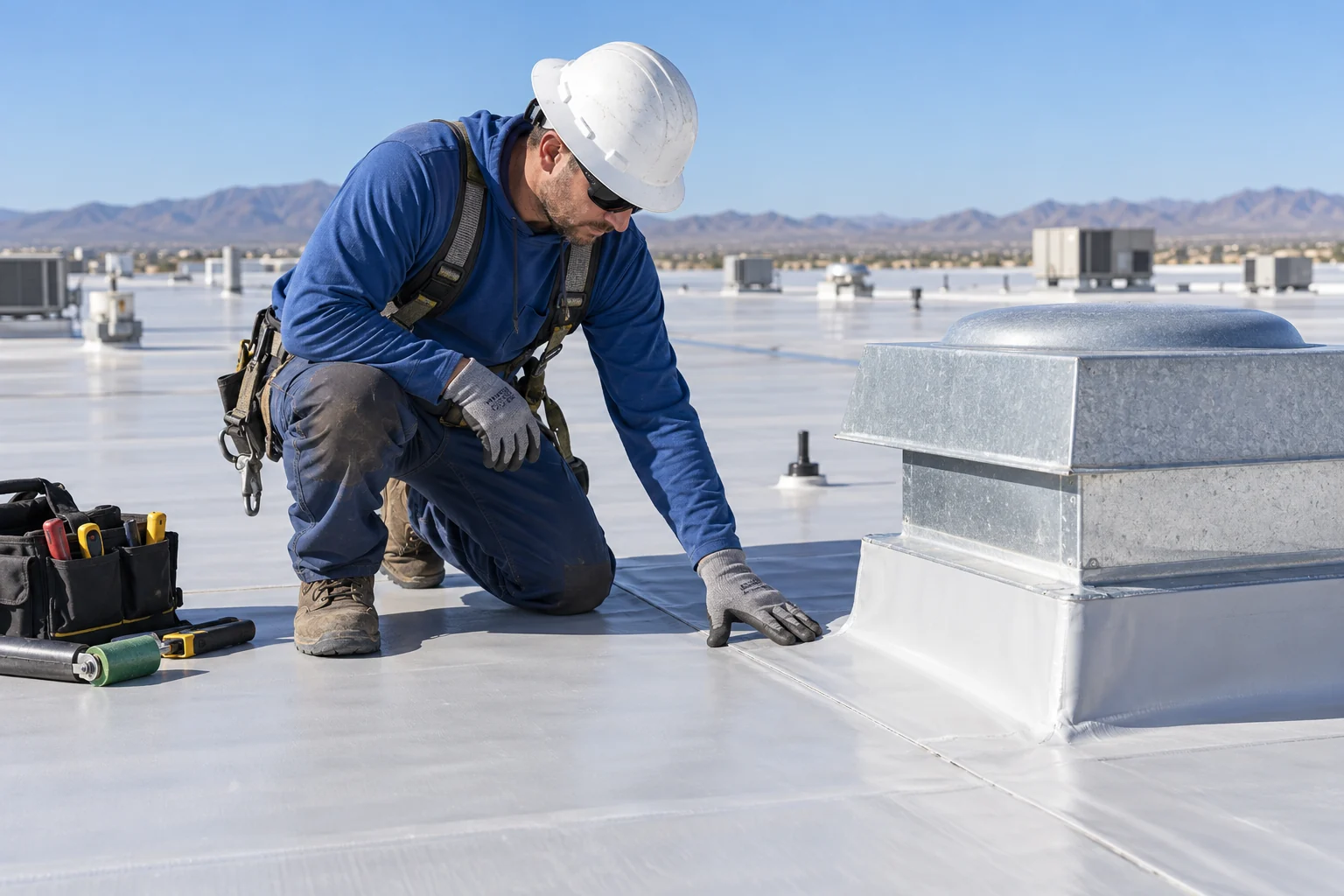
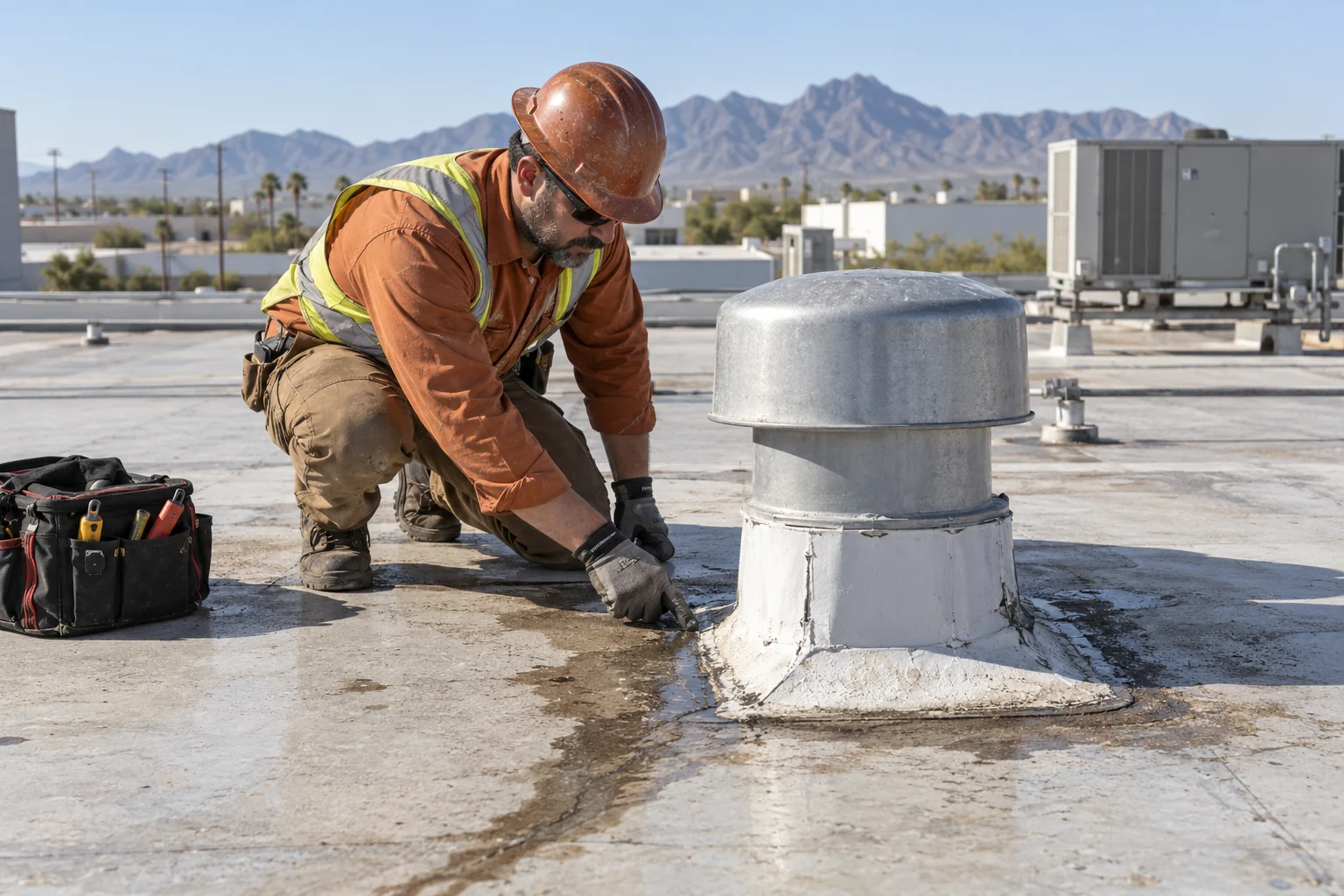
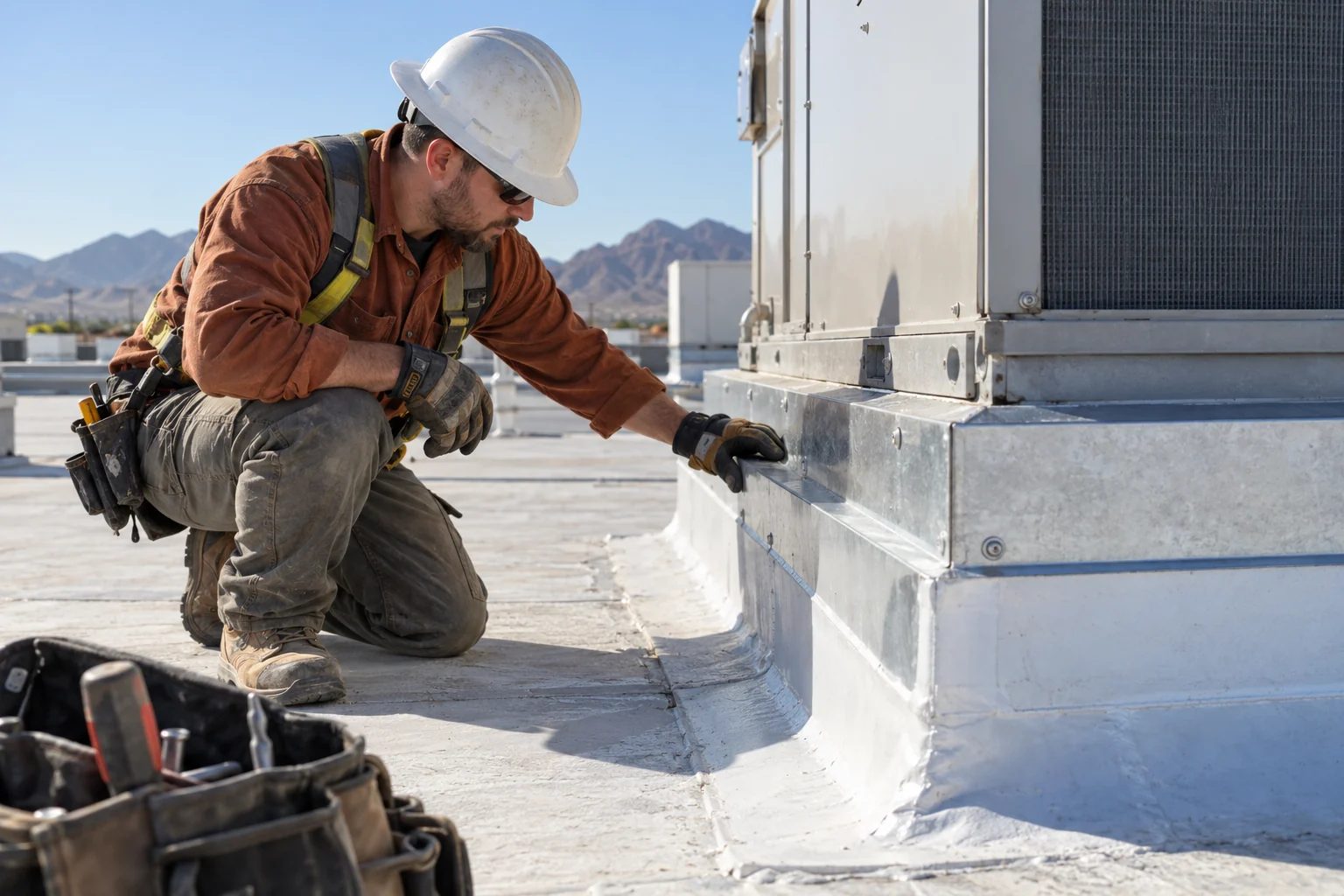
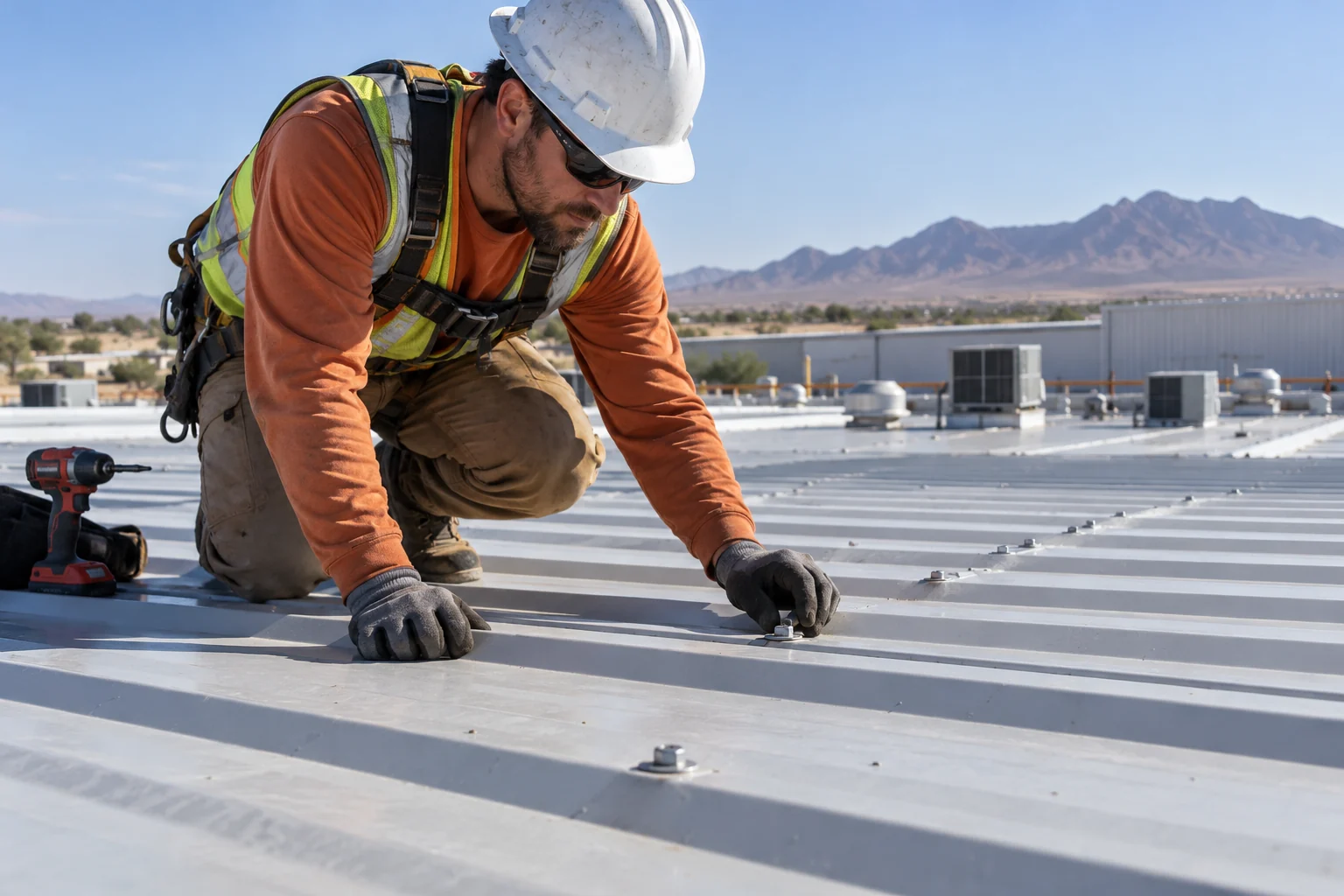
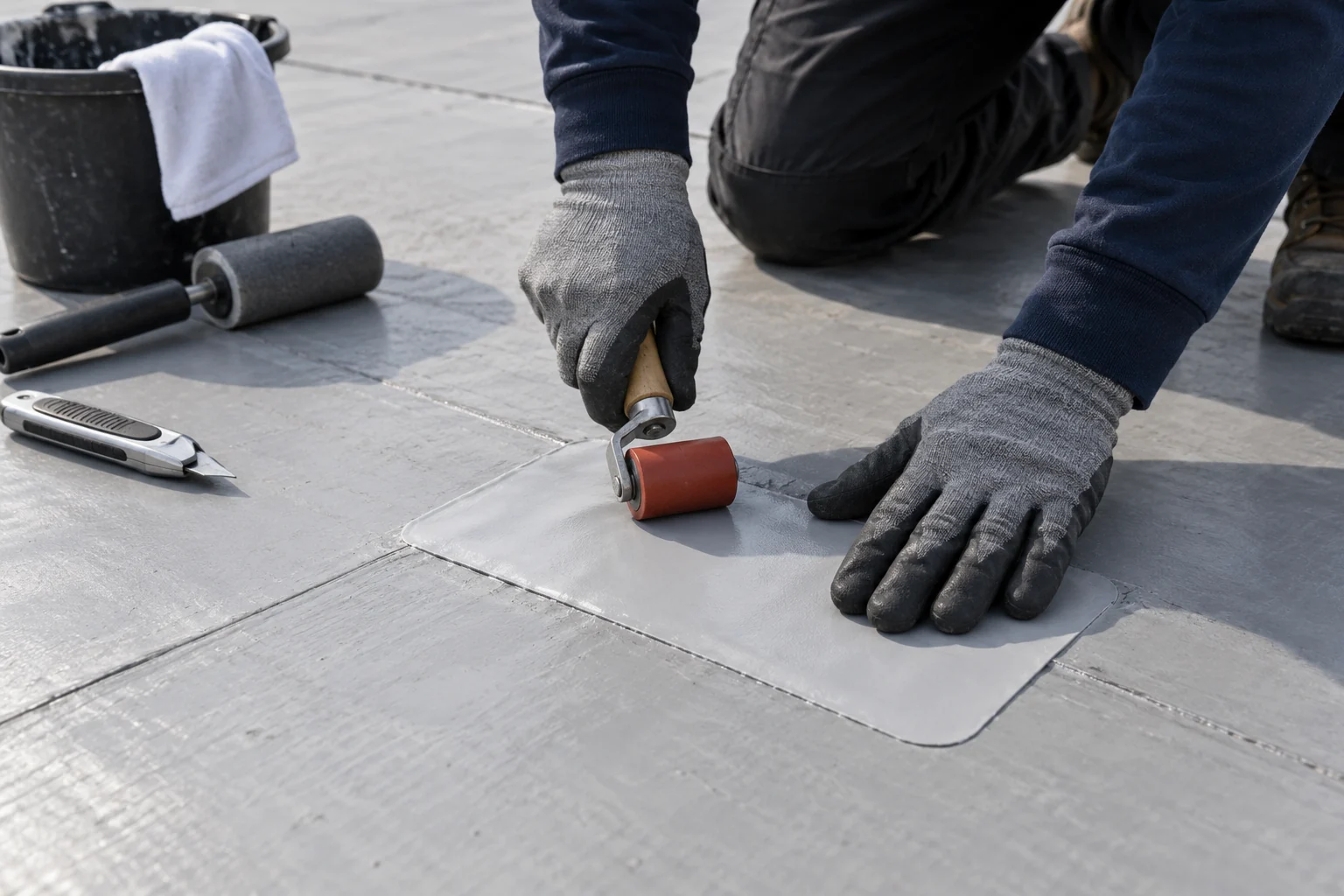
Repair The Cause Of The Leak
Water seen inside a building does not always enter directly above the stain. Roof slopes, assembly layers and other building components can affect its path. The repair needs to follow the evidence on the roof, supported by your account of when and where the leak appears.
Our repair services cover leak investigation, flashing work, metal roof repairs and assessment of storm-related damage. If the roof material is unknown, describe the problem in ordinary language. You do not need to identify a membrane or select a repair product before requesting service.
Keep Sound Roofing Where Practical
A defined defect in a serviceable roof may be corrected without replacing the whole assembly. The surrounding membrane or panels must still be suitable for a durable repair. Wet insulation, loose materials or extensive deterioration may increase the necessary scope.
Recurring trouble deserves another look at the cause. Repeatedly covering the same area can obscure a failed transition or other condition that needs more specific work.
Work Around The Building
Commercial repairs often occur above occupied space. Tell us about the affected area, sensitive equipment and access restrictions. Roof work should account for the building’s operations as well as the defect itself.
Stay off an unfamiliar or damaged roof. Describe what you can observe from a safe location, including whether water appears only during rain, after equipment operation or under other conditions.
A Clear Description Is Enough To Begin
You do not need to know whether the roof is TPO, PVC, EPDM or another assembly before requesting repair. Describe the symptoms and use Not Sure for an unidentified system. The inspection establishes the material and compatible method.
Useful observations include the interior location, timing of leakage and any recent rooftop work. If an earlier repair changed the symptom, mention that history. Those facts help focus assessment without proving the cause on their own.
Local Repair Needs A Sound Surrounding Roof
A patch or reconstructed detail must connect to serviceable retained material. Deterioration, contamination and incompatible previous repairs can increase preparation or the repair area. A small visible opening does not always mean a small scope.
At the same time, one defect does not prove the entire roof needs removal. The inspection should establish where the affected condition ends and whether localized work remains practical. Repair decisions follow that evidence rather than either minimizing every task or assuming replacement.
Moisture Beneath The Surface
Water entry may affect insulation and adjacent roofing. A dry-looking exterior after rain does not establish that the assembly is suitable throughout. Where there is a concern, further evaluation can help define affected material.
Closing the opening should be part of a scope that addresses those conditions. Localized removal may allow sound areas to remain. Broader deterioration can change the necessary work, which is why an online form cannot diagnose the full repair from the building footprint.
Repeated Trouble Deserves Another Look
A returning leak may involve the same defect, a neighboring condition or a different route to a familiar interior location. Another identical patch is not automatically the right response. The assessment should revisit the source and surrounding assembly.
A more complete detail repair may still solve a defined problem without replacing the whole roof. If the retained material cannot support that work, the limitation needs to be recognized before another temporary-looking correction is treated as lasting.
Coordinate The Repair With The Property
Tell us about roof access, tenant arrangements and sensitive operations below the affected area. These conditions can influence the practical work plan. A localized repair and a larger removal have different access needs, so no universal operating arrangement is assumed.
After repair, later equipment changes and new penetrations still require compatible roofing work. Ongoing roof care remains necessary; a repaired area is part of a system that continues to experience weather and building activity.
What Does The Repair Request Confirm?
The form starts a roofing request for the identified property. It does not reserve an appointment, diagnose the source or establish an insurance outcome. The work is defined through assessment of the roof and affected materials. Use the symptom description to explain the need, then let inspection resolve the technical questions that cannot be answered from the form alone.
Get A Free Estimate
Use the repair request form with the property location, a brief description and your contact details. Repair costs depend on access, materials and the extent of damage, so the form does not turn roof area into an automatic repair price. An inspection determines what work is appropriate.
A stopped drip alone does not confirm that its cause has been corrected.