Assess Equipment-Related Leaks
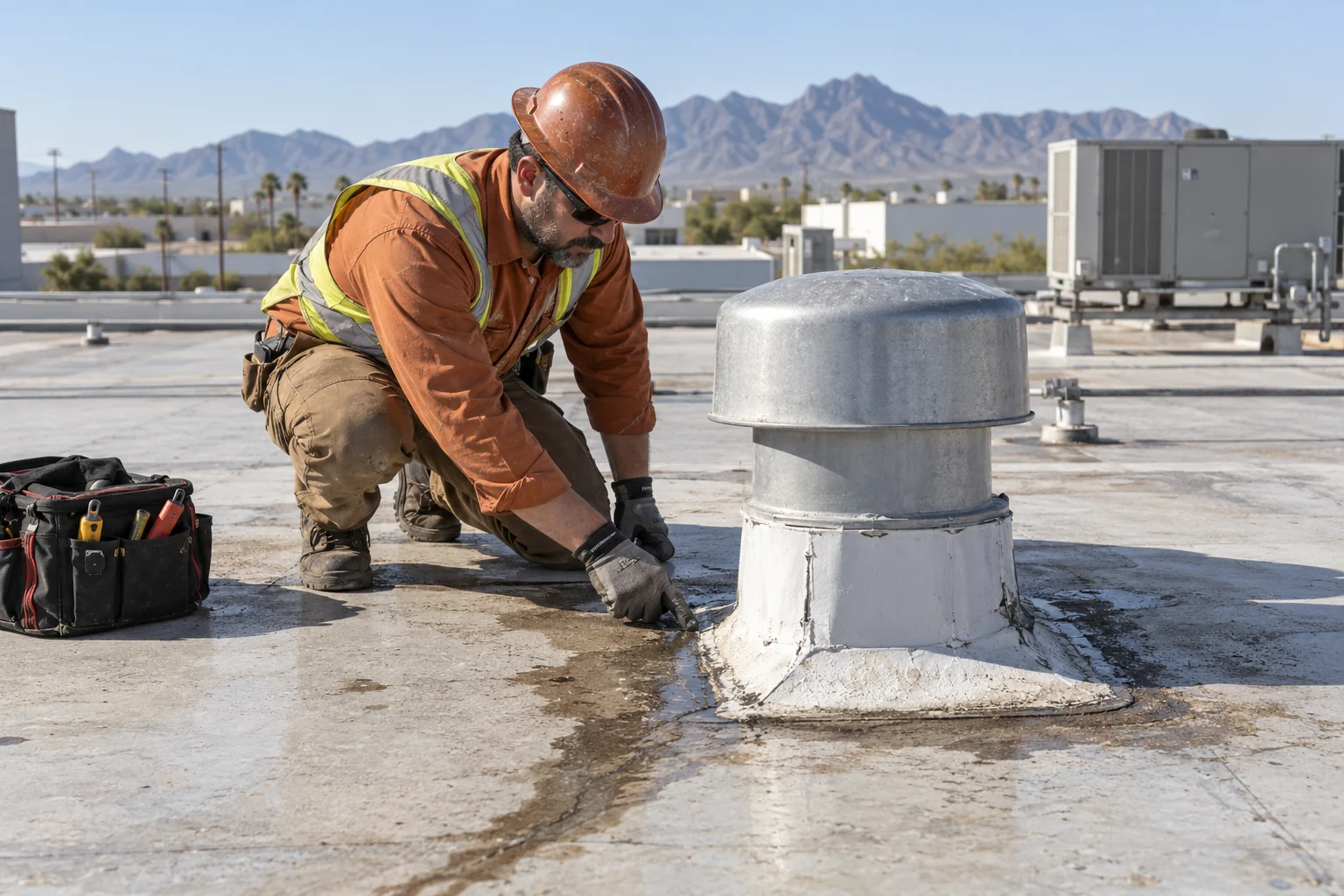
Leaks near equipment deserve evaluation of both the roof detail and the equipment connection. A curb flashing, pipe penetration or equipment condition can produce similar interior symptoms.
Recent service activity can also be relevant. Share that history without assuming it proves the cause.
Rebuild Failed Details Where Needed
Some defects can be corrected locally, while others need unsuitable material removed and a detail reconstructed. Repeated surface sealant is not a substitute for a reliable connection. The existing system determines the compatible method.
Leaks, Flashing, Metal And Storm Concerns
Our repair service covers several types of commercial roofing trouble. Leak assessment follows the water-entry route. Flashing repair addresses the connections around penetrations and edges. Metal repair considers panels, fasteners and seams. Storm-related work begins by identifying actual damage.
Those categories can overlap on one property. A storm may expose a failed detail, or a metal roof leak may involve equipment flashing rather than a panel. Choose the closest description and explain what you observed. The inspection determines the repair rather than the category alone.
What Happens At A Failed Curb?
A roof curb creates a change in shape where the main roof connects to a raised component. Its corners, terminations and surrounding material need to work together. A visible crack may be only part of the condition. The adjoining curb or earlier repair can affect whether a localized correction is suitable.
If the detail is unsound, rebuilding it with compatible materials may be more appropriate than another surface application. The new work must connect to a serviceable roof. Where nearby membrane or insulation is affected, the scope may extend beyond the curb itself.
Separate Equipment And Roofing Problems
Water near a rooftop unit can have more than one possible source. Roofing defects, equipment conditions and connections between components may produce similar interior symptoms. The assessment should follow the evidence instead of assigning the problem to whichever surface is easiest to reach.
Describe whether leakage occurs during rainfall or equipment operation, and mention any recent service or replacement. That history can focus the investigation. It is not proof of responsibility or cause, and the request should not require a property manager to make that determination in advance.
Compatible Materials Matter
The existing roof may be a thermoplastic membrane, EPDM, metal or a coated assembly. These surfaces do not all accept the same repair materials. Earlier patches can further change the preparation required. A product that appears to cover the opening is not necessarily a suitable long-term connection.
The repair needs to be selected for the roof actually present. If the material is unknown, use Not Sure. Identification and condition assessment belong in the inspection, not in guesswork based on surface color or an incomplete maintenance history.
Plan For Future Service Access
Mechanical equipment will need attention after the roof repair. If regular access contributed to damage or brings traffic close to vulnerable details, the work discussion should include that route. Correcting the current defect does not eliminate continued wear or future alterations.
New equipment penetrations should also receive appropriate roofing attention. Treating every later change with a generic patch can create compatibility problems around an otherwise sound repair. Coordinating those changes helps preserve the roof system as it is used.
Begin With The Building And Symptom
Provide the commercial property location, the affected interior area and a short account of what happens. Include access restrictions or sensitive operations that may affect inspection. There is no need to measure the roof or locate the exact opening yourself.
Repair pricing follows the defect, materials, access and affected layers. An automatic area-based result would not establish those conditions. The request starts the assessment needed to define the actual work.
Should A Patch Be Removed Before The Visit?
No removal is needed to complete the request. Describe the visible condition and known history from a safe location. Disturbing a patch can change the defect or expose an area before suitable corrective work is arranged.
The assessment determines whether the existing material can remain, needs preparation or should be removed as part of the repair. That decision depends on compatibility and condition rather than the number of layers alone. If equipment work or a temporary measure recently changed the area, include that information. It can help the inspection distinguish the current surface from the original detail without requiring the owner to uncover it first.
Get A Free Estimate
Request repair at the Goodyear commercial property with a clear account of the affected equipment area or other roof concern. Mention recent service work without assuming it establishes the cause. The inspection considers the roof and adjoining components, then defines compatible corrective work. Access and affected materials determine the estimate rather than a standard area-based repair calculation.