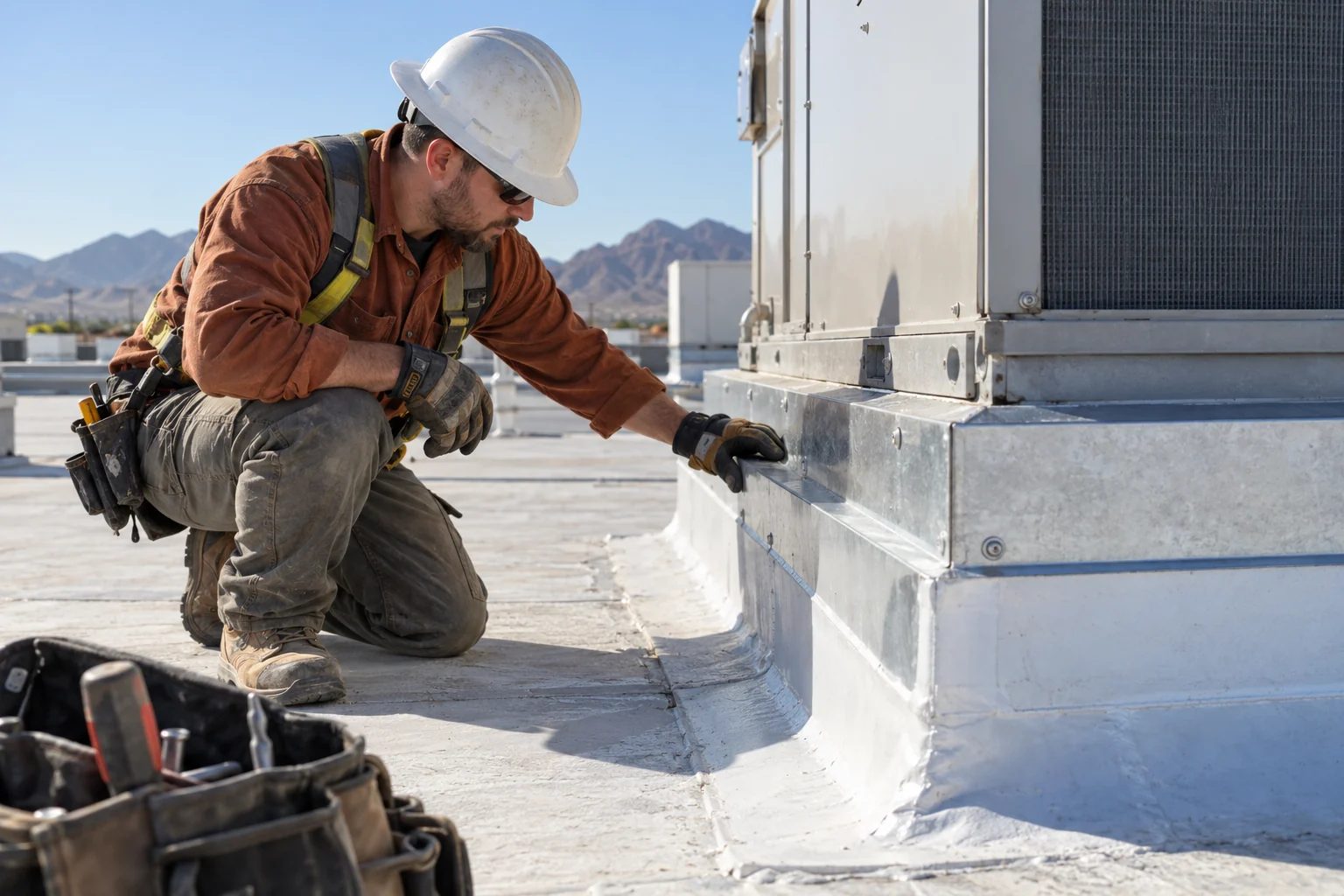
Why Transitions Need Attention
A membrane or metal panel cannot simply stop at a penetration and remain weatherproof. Flashing carries the roof protection through that change in shape. Open seams, stressed corners and deteriorated materials can create a water-entry route even when the surrounding roof looks sound.
A previous layer of sealant may obscure the condition rather than explain it. The repair needs to consider attachment, material compatibility and the geometry of the transition.
Repair Or Rebuild The Detail
Some defects can be corrected locally. Others require removal of failed material and reconstruction of the flashing with compatible components. The chosen method depends on the existing roof system and the condition of the surfaces that will receive the repair.
Mechanical equipment can introduce separate problems. Water near a curb may relate to roofing, the equipment itself or another connection. The inspection should distinguish those possibilities rather than assigning every leak to the flashing.
Account For Movement And Access
Roof details experience conditions different from the broad field of roofing. Equipment maintenance and repeated foot traffic can affect nearby areas. Tell us about recent equipment installation or repair so the assessment includes changed penetrations and access routes.
Identify The Whole Transition
A flashing repair should consider the connection from the main roof to the adjoining component. A pipe, curb, wall or perimeter edge creates a different shape and may involve different materials. The visible crack is only one part of that detail.
The inspection should establish whether the surfaces on both sides remain suitable. Deterioration of the adjoining component or an unstable attachment can affect the repair. A sound roof membrane cannot compensate for a deficient connection to another part of the building.
When Old Material Needs Removal
Earlier sealants and patches may hide the original condition. Some can remain if they are sound and compatible with the intended work. Others may require removal so the detail can be assessed and rebuilt appropriately.
Adding layers is not a substitute for a reliable connection. If the base is loose or unsuitable, a fresh surface may carry that weakness forward. The preparation should reach material that can support the repair rather than preserve every existing patch regardless of condition.
Compatibility Across Roofing Systems
Flashing components need to suit the actual roof. TPO, PVC, EPDM, metal and coated systems do not all use the same products or joining methods. An older coating can also change the exposed repair surface.
A property owner does not need to choose those products in the request. Describe the affected area and use Not Sure for an unidentified roof. The inspection establishes the system and selects a method appropriate to the retained materials.
Check Nearby Roofing And Insulation
A failed transition can allow water into the surrounding assembly. The scope may need to include affected material beyond the visible flashing. Closing the surface without understanding that condition can leave part of the problem unresolved.
The extent should be established rather than assumed. A localized repair may be suitable when surrounding roofing is sound, while wider deterioration can require additional work. The repair boundary follows the assembly’s condition, not simply the outline of a curb or pipe.
Coordinate With Other Rooftop Work
Equipment servicing and replacement can alter penetrations or nearby access routes. Mention recent changes when requesting repair, but do not assume they prove the cause. The assessment should consider the physical condition and the timing together.
Future changes also need roofing attention. A repaired detail should not receive arbitrary later patches or new penetrations without compatible work. Maintaining those connections helps preserve the system as the building continues to operate.
A Focused Estimate Request
Identify the equipment or roof area if known, the interior symptom and when it occurs. Include access restrictions that could affect inspection. Safe observations are sufficient; no one needs to remove flashing to complete the form. The estimate follows the actual repair, preparation and affected area rather than a general price based on roof size.
Can One Detail Affect Several Interior Areas?
Water can move after entering an assembly, so multiple interior symptoms do not necessarily identify multiple roof openings. They also should not automatically be assigned to one source. Report each location and timing separately where possible. The inspection can then assess the relevant details and distinguish the actual entry routes.
Get A Free Estimate
Identify the affected equipment or roof area if known, and explain the symptoms. You do not need to measure a curb or remove old material. The inspection establishes what can be repaired and where a complete detail needs to be rebuilt.