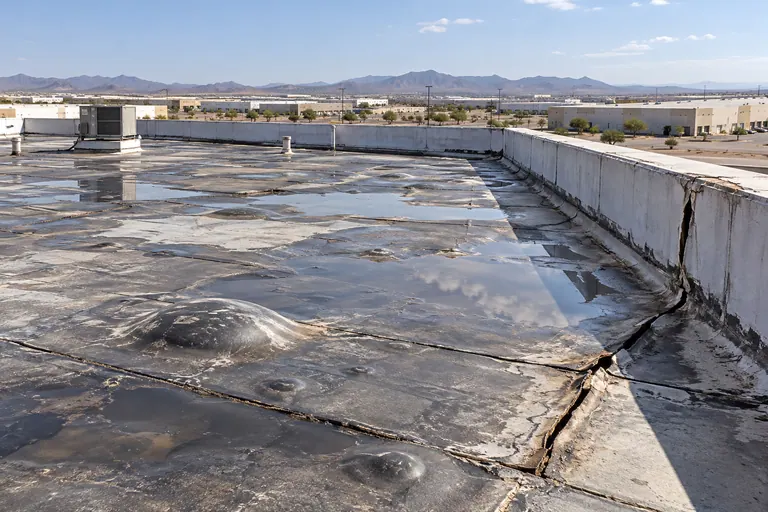
Flat Roof Repair
Most Goodyear distribution roofs are TPO or other single-ply sheets, so drain and seam repairs follow flat roof methods. Welded patches match the sheet already on the roof.
Flat roof repair
Commercial roof repair in Goodyear for large distribution and warehouse roofs, where water travels a long way to each interior drain before it leaves the roof.
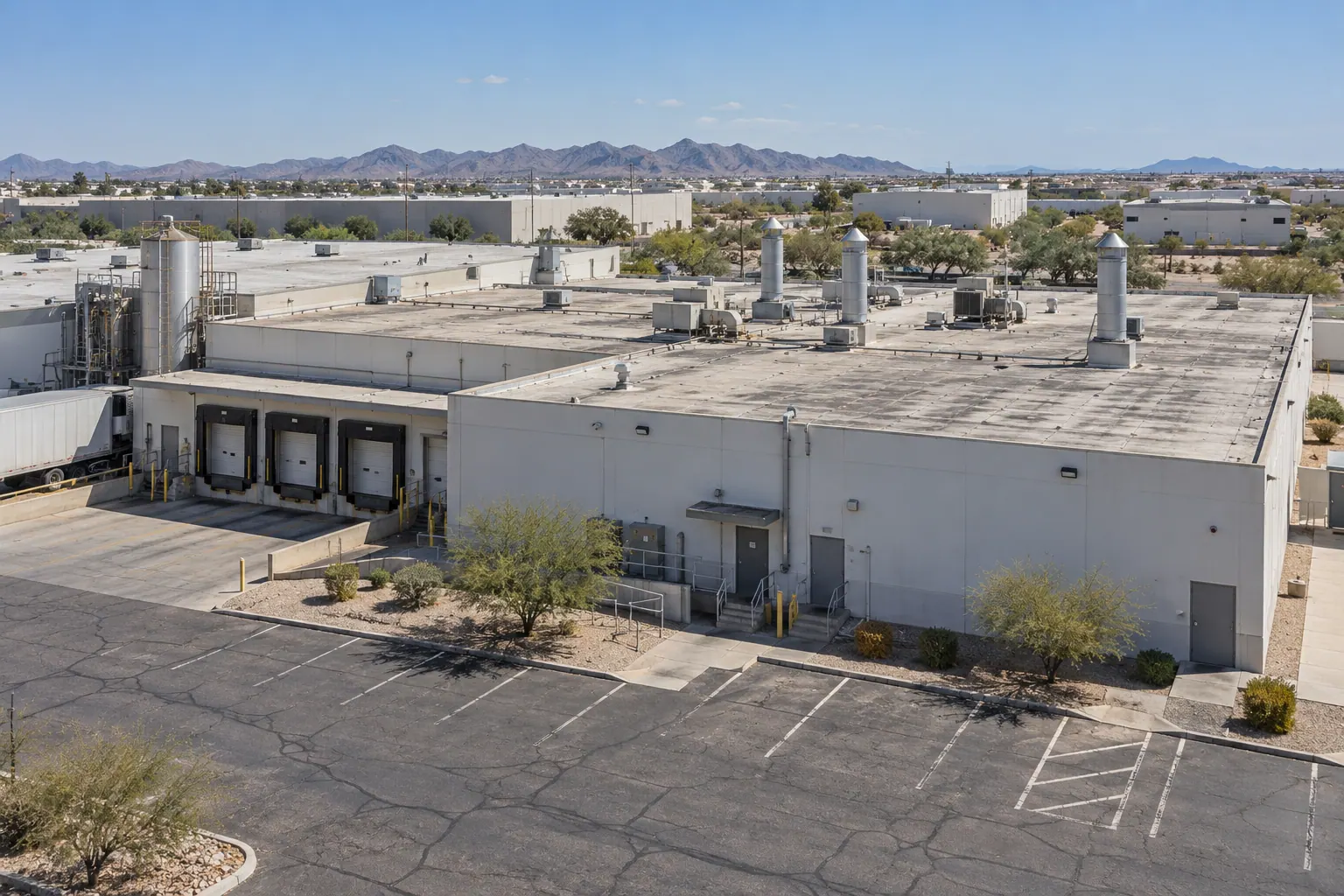
Distribution buildings near the Loop 303 and I-10 interchange cover acres of roof, and every square foot drains to a handful of interior drains.
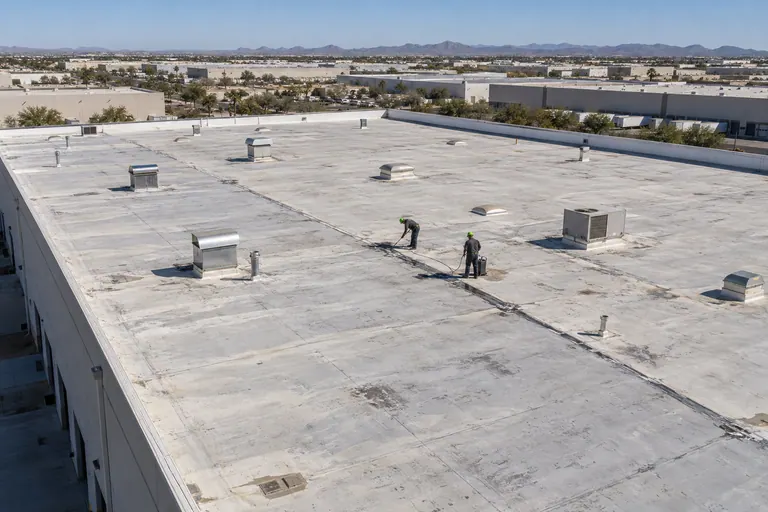
On a roof that size, a slow drain shows up as a long ponding line rather than a puddle. Water sits along the low path, the membrane there ages faster, and any seam in the path stays wet for days after a storm. Dirt rings on the membrane show where it sits.
Repairs here focus on the drains themselves: clearing leaders, resetting clamping rings, and reflashing the bowl. Seams along the wet path get probed and patched, and low spots get tapered insulation when clearing the drain falls short. Each drain gets checked from the bowl down to the leader.
These five details decide whether a big roof drains clean after a storm.
Plan view, not to scale
Strainers fill with dust and shrink-wrap scraps, then water backs up under the clamping ring. Clearing them is the first job.
Long low paths hold water between drains, and seams along them never fully dry. Tapered board can raise the low path.
Wide sheets mean long seams, and a short open stretch can feed water far across the deck. Probing finds the open stretch.
Rows of skylights interrupt the drainage path and leak at their curbs. Resealed curbs stop the drips.
When drains back up, water rises to the edge and finds gaps in the edge metal. Edge metal gets resealed at its joints.
Curbs set in the drainage path act like dams, and water stacks up on their upslope side. Small crickets push the water around them.
On a large roof, one blocked drain can hold back a lot of water. Clearing and repairing it early keeps that weight off the deck.
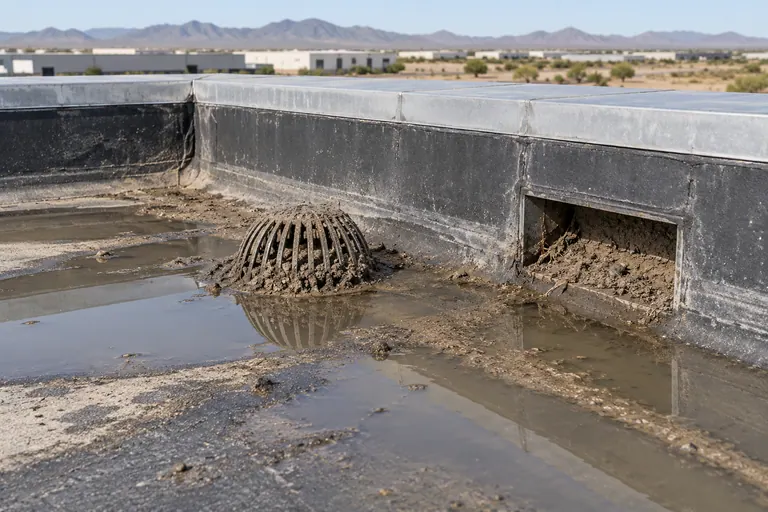
Two services cover most Goodyear warehouse roofs.
Most Goodyear distribution roofs are TPO or other single-ply sheets, so drain and seam repairs follow flat roof methods. Welded patches match the sheet already on the roof.
Flat roof repair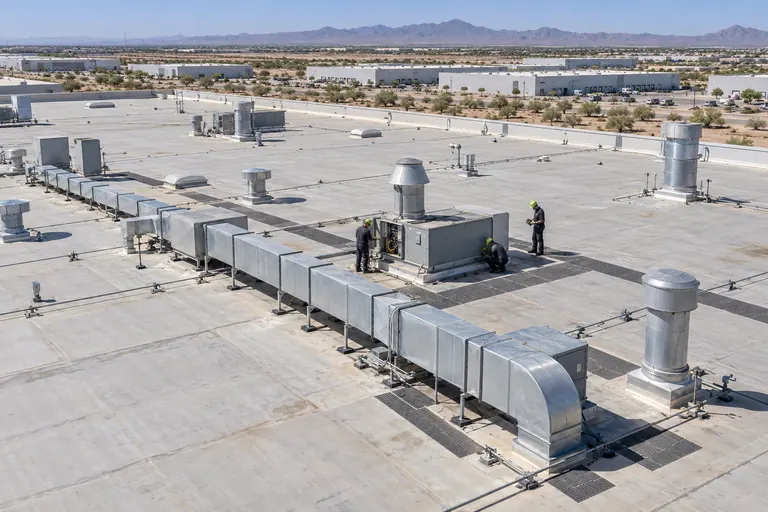
Warehouses that run conveyors, coolers, or charging rooms add equipment curbs, and that work needs lockout and scheduling. Work zones keep the floor running.
Industrial roof repair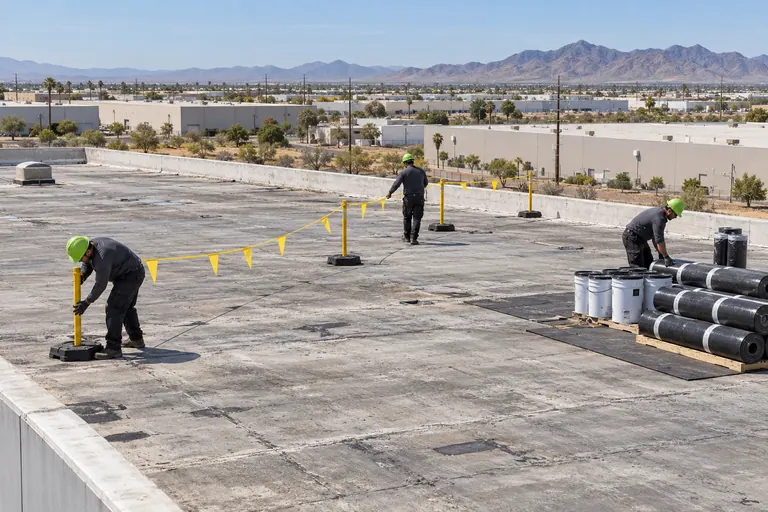
Call with the building size and where the water sits. We check the drains first, since most ponding starts there.
Large roofs get the same four steps, mapped drain by drain.
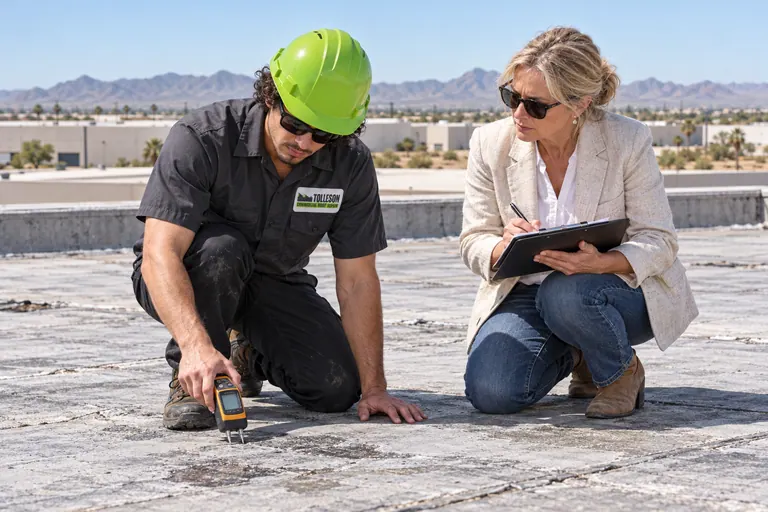
We walk each drainage area, mark ponding lines, check every drain bowl and leader, and scan the wet paths for soaked insulation. Dirt rings show where water has sat.
Each drain gets a number on the roof plan with its condition, so repairs and future checks line up. The same numbers go on every later report.
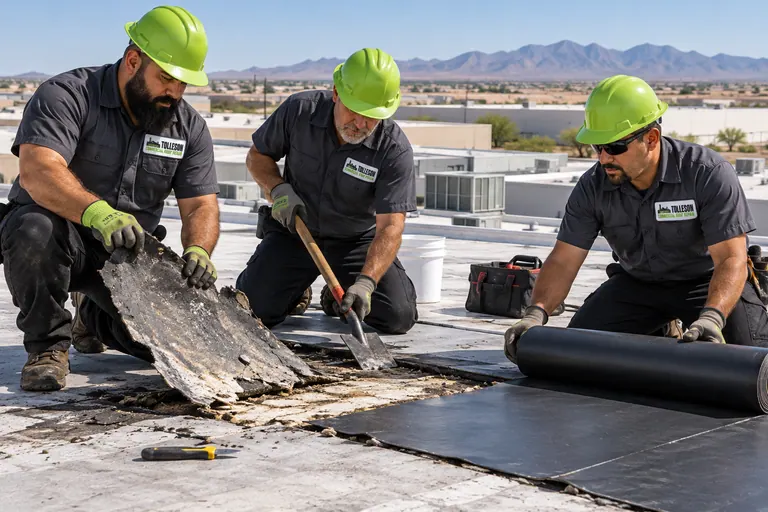
Leaders are cleared, bowls reset and reflashed, and seams along the ponding lines patched. Wet insulation along the path is replaced.
Where water is available, drains get a flow test after the repair, and the photos go into your roof file. The file shows each drain before and after.
Goodyear sits west of Tolleson along I-10.
Walk pads and curb repairs on retail roofs.
Repair scopes set before any re-roof permit.
Coping and scupper repairs on parapet walls.
What Goodyear warehouse owners ask about drains and storms.
Monsoon storms mostly test drainage and roof edges. The season runs June 15 to September 30, according to the National Weather Service, with sudden heavy rain, strong outflow winds, and blowing dust.
On big Goodyear roofs, dust-packed drains back water into seams and wind pulls at loose edge metal, so early June is the time to clear drains.
Sometimes a cricket or tapered insulation that steers water to an existing drain is the better fix. A new drain means cutting the deck and tying into the storm line, which is a bigger job and usually a permitted one.
Walk the floor for new drips, look at the ceiling under each drain, and note any water by the dock doors. Send that list along, and the drains in those areas get checked first.
Drains near loading docks and conveyor lines get looked at first, because water there does the most damage.
Twice a year at minimum, before and after monsoon season. Buildings next to open lots or construction gather dust faster and do better with a check after each big storm.
The City of Goodyear Building Safety Division. The inspection notes whether a repair scope needs a permit, and drain or deck work is where that question comes up most.
On a big roof the deck can sag between supports, or the insulation can compress, leaving a low path that holds water. Tapered insulation or a cricket at that spot moves the water back toward the drain.
Drains near loading docks and conveyor lines get looked at first, because water there does the most damage.
Yes. Large roofs get split into zones by drain area, and each zone is repaired and closed before the next, so the building keeps working underneath.
Yes. Roof work happens above, and the only inside access needed is a look at the deck under the stains. Those checks get timed with your floor supervisor.
Drains near loading docks and conveyor lines get looked at first, because water there does the most damage.
Send the building address and where water collects. We inspect every drain and repair what we find.
Want A Call Back About Your Roof?
Leave a name and number, or call (623) 310-0161 now.