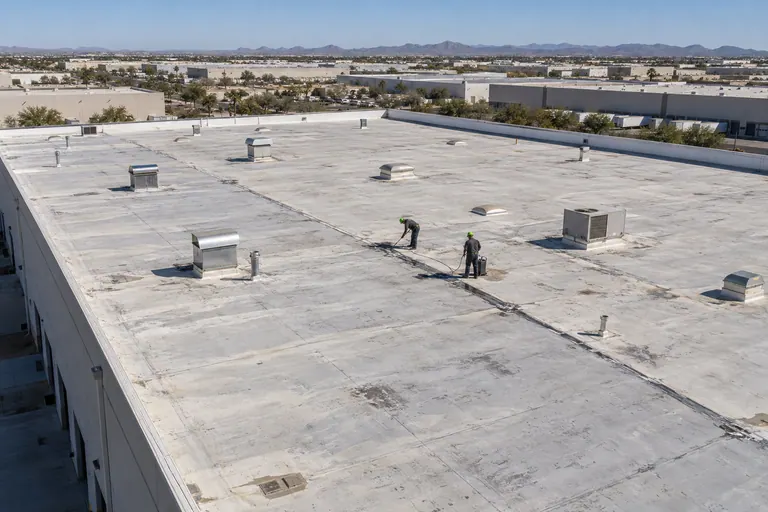
Flat Roof Repair
Built-up and modified roofs are flat roof work, and the repairs use materials that match the plies already in place. The plies match what is already there.
Flat roof repair
Commercial roof repair in Maryvale for older shops and strip retail centers, with built-up roofs repaired in place using plies and flashing that bond to what is already there.
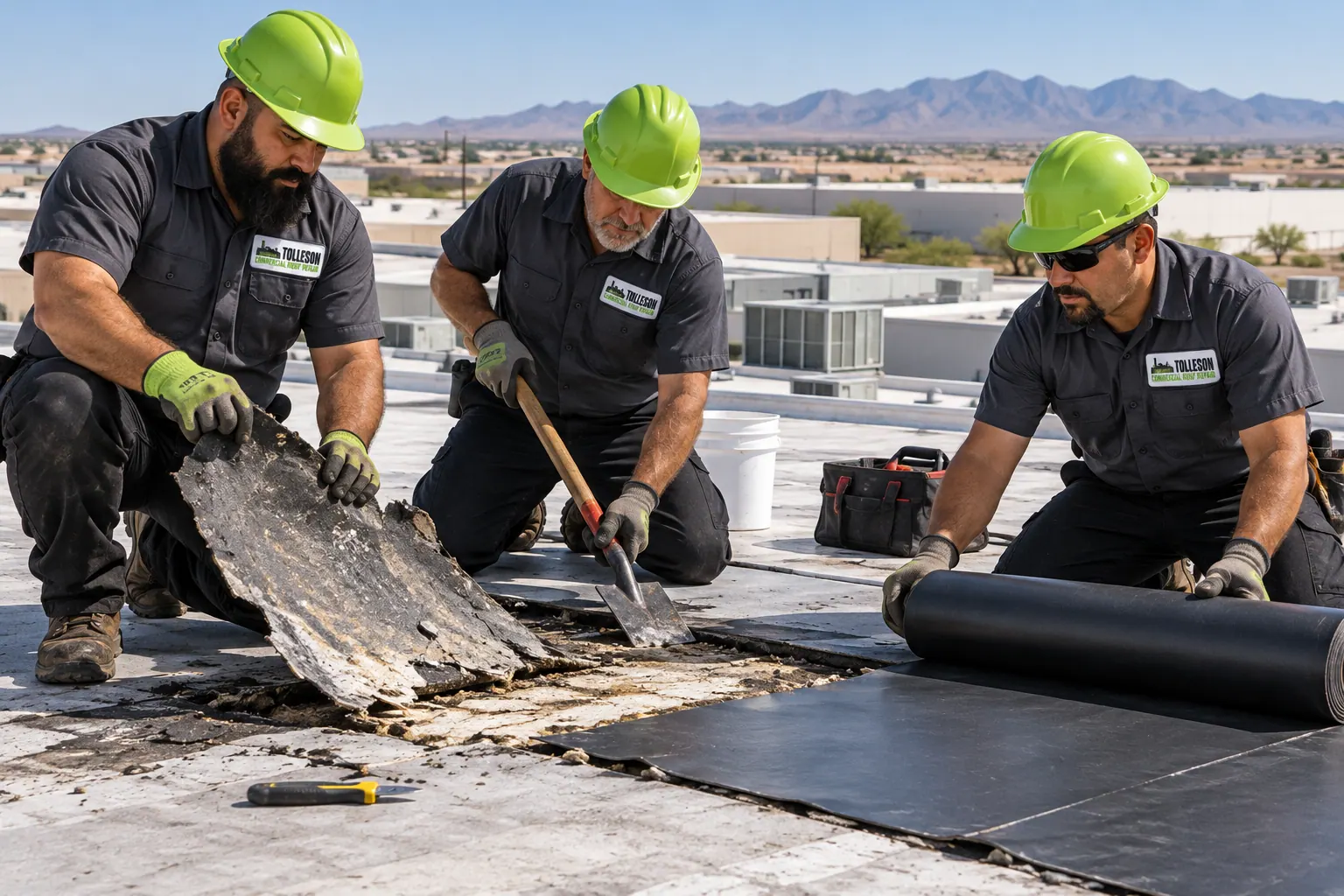
Plenty of Maryvale shops and strip centers sit under built-up roofs patched many times. Those roofs repair well when the work matches the asphalt and felt already on them.
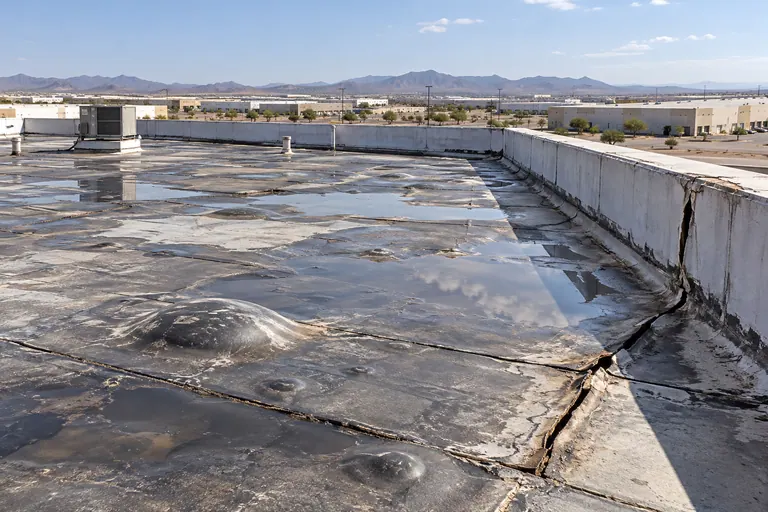
Built-up roofs fail in their own way. Blisters rise where moisture is trapped between plies, splits open across the field, and the surfacing cracks into an alligator pattern as the asphalt dries out in the sun. Each of those failures repairs well on its own.
We cut out blisters and splits, add new felts with compatible asphalt or cold-applied adhesive, and resurface the repair. Base flashing at walls and curbs gets renewed, and lifting patches come off instead of getting covered again. The repair blends into the roof around it.
These five conditions show up on most older built-up roofs we repair here.
Plan view, not to scale
Trapped moisture lifts the top plies into soft domes that break under foot traffic. Cutting them out and re-plying ends the leak.
Long cracks open across the field where the roof moves over deck joints. New felts bridge the crack.
Asphalt flashing sags and pulls off the wall as the felt turns brittle. New base flashing goes up the wall and under the cap.
Mastic patches stacked over the years crack at the edges and let water under. Removing them exposes the real damage.
Filler shrinks inside pitch pans around supports and leaves an open ring. New filler and a sealed rim close the gap.
Built-up plies around older drains crack and lift, and the clamping ring loosens over time. New plies and a reset ring seal the bowl.
Repairing a built-up roof in place stretches its life and puts off the cost of a tear-off.
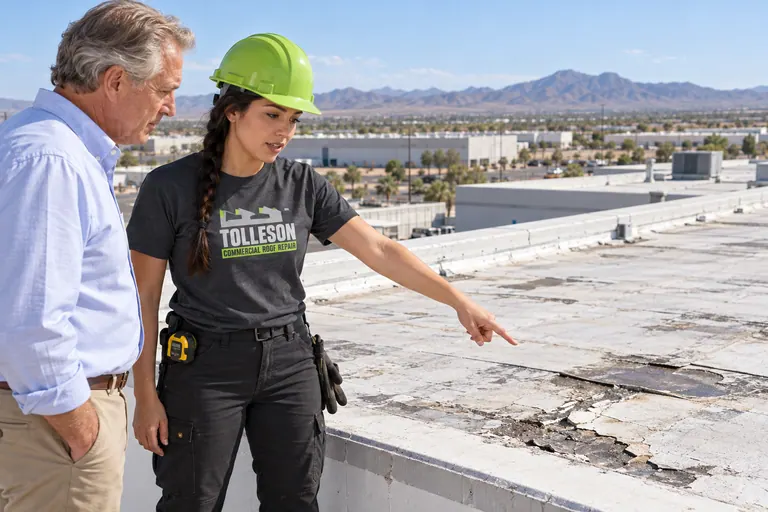
Two services fit most older Maryvale roofs.
Built-up and modified roofs are flat roof work, and the repairs use materials that match the plies already in place. The plies match what is already there.
Flat roof repair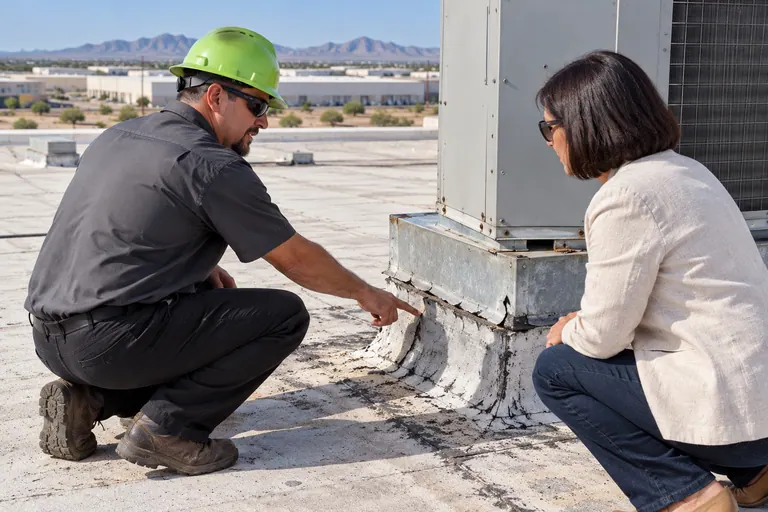
Stains under old roofs can travel between plies, so tracing finds the true opening before the patch goes on. The trace starts under the stain.
Leak tracing and repair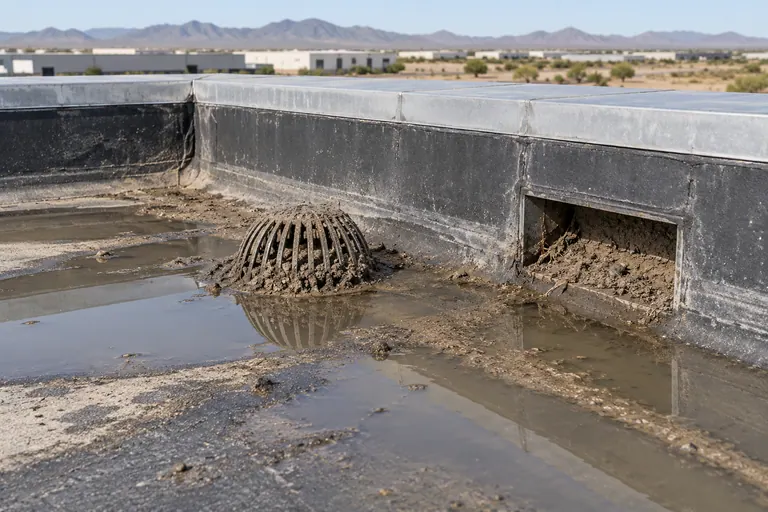
Call with the building and how many times the roof has been patched. We tell you what can be repaired and what should come off.
Built-up repairs follow four steps.
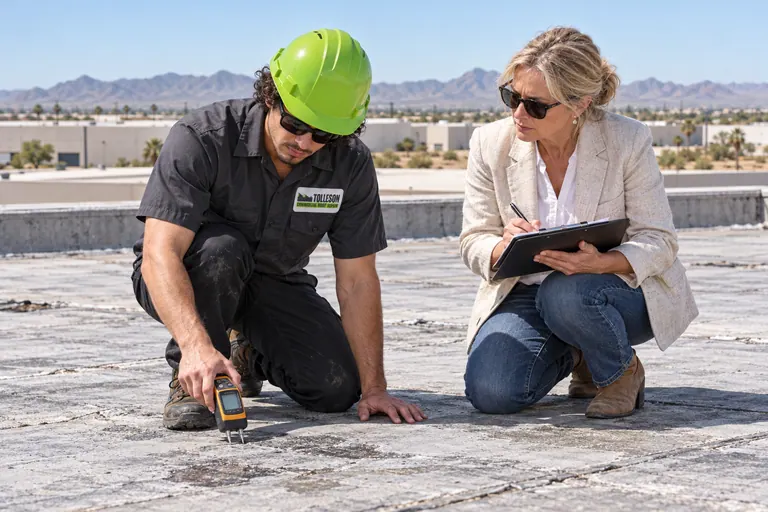
We walk the field, press on blisters, check splits and old patches, and core the roof where moisture readings run high. Old patch layers get noted on the sketch.
Blisters, splits, and failed patches are cut out until the felt underneath is dry and firm. Edges are trimmed square for the new plies.
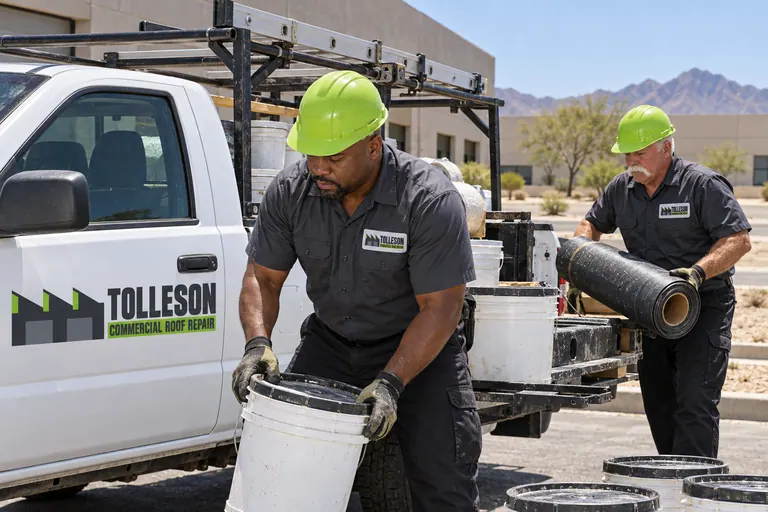
New felts go in with compatible asphalt or adhesive, then the repair is surfaced to shield it from sun. Each layer is pressed in to bond fully.
Each repaired area is photographed and marked on a roof sketch for the next visit. The sketch shows what to watch next year.
Maryvale sits north of I-10, east of Tolleson.
Coping and scupper repairs on parapet walls.
Drain cleanout on dusty industrial-park roofs.
Walk pads and curb repairs on retail roofs.
What owners of older Maryvale buildings ask.
Cost comes down to how much of the roof needs work and how hard it is to reach. On Maryvale built-up roofs the biggest factors are the roof system, the size and number of leak areas, wet insulation that must be replaced, access, rooftop equipment, and scheduling limits like night work.
As a rule, no. Single-ply sheets need compatible adhesives to bond to asphalt, and mixing systems at a patch tends to fail at the edges. We repair built-up roofs with built-up materials or approved modified bitumen.
Often, yes. Built-up roofs have several plies, so damage at the top layers leaves the lower ones protecting the deck. Cutting out the bad spots and re-plying them keeps the roof working for years.
Each repaired spot goes on a simple roof sketch, so the next visit knows where the plies were replaced and what to watch.
Only blisters that are broken, soft, or growing. Small firm blisters can stay and get watched, while opened blisters get dried, re-plied, and resurfaced.
Cracked surfacing that looks like alligator skin, caused by asphalt drying out in the sun. Left alone, the cracks deepen into the felts, so it gets resurfaced during repairs.
As long as the plies around the patch are dry and firm, the roof keeps taking repairs. When patches cover much of the field or start failing at their edges together, a replacement plan makes more sense.
Each repaired spot goes on a simple roof sketch, so the next visit knows where the plies were replaced and what to watch.
Maryvale is a village inside Phoenix, so the City of Phoenix Planning and Development Department issues commercial permits. The inspection notes whether your scope needs one.
It helps on any roof with many patches. A scan shows where water sits under the plies, so the repair covers all of the wet area instead of only the visible blister.
Each repaired spot goes on a simple roof sketch, so the next visit knows where the plies were replaced and what to watch.
Tell us where the patches keep failing. We repair the built-up roof to match and send photos.
Want A Call Back About Your Roof?
Leave a name and number, or call (623) 310-0161 now.