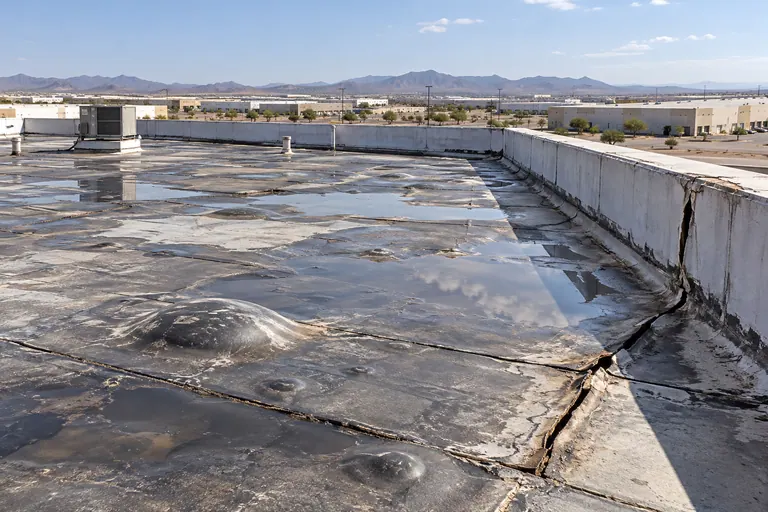
Flat Roof Repair
Most plant roofs are TPO or built-up, so curb and drain work follows the same flat roof repair methods.
Flat roof repair
Industrial roof repair for Tolleson food plants, cold-storage buildings, and distribution centers, planned around shifts, rooftop equipment, and dock traffic.
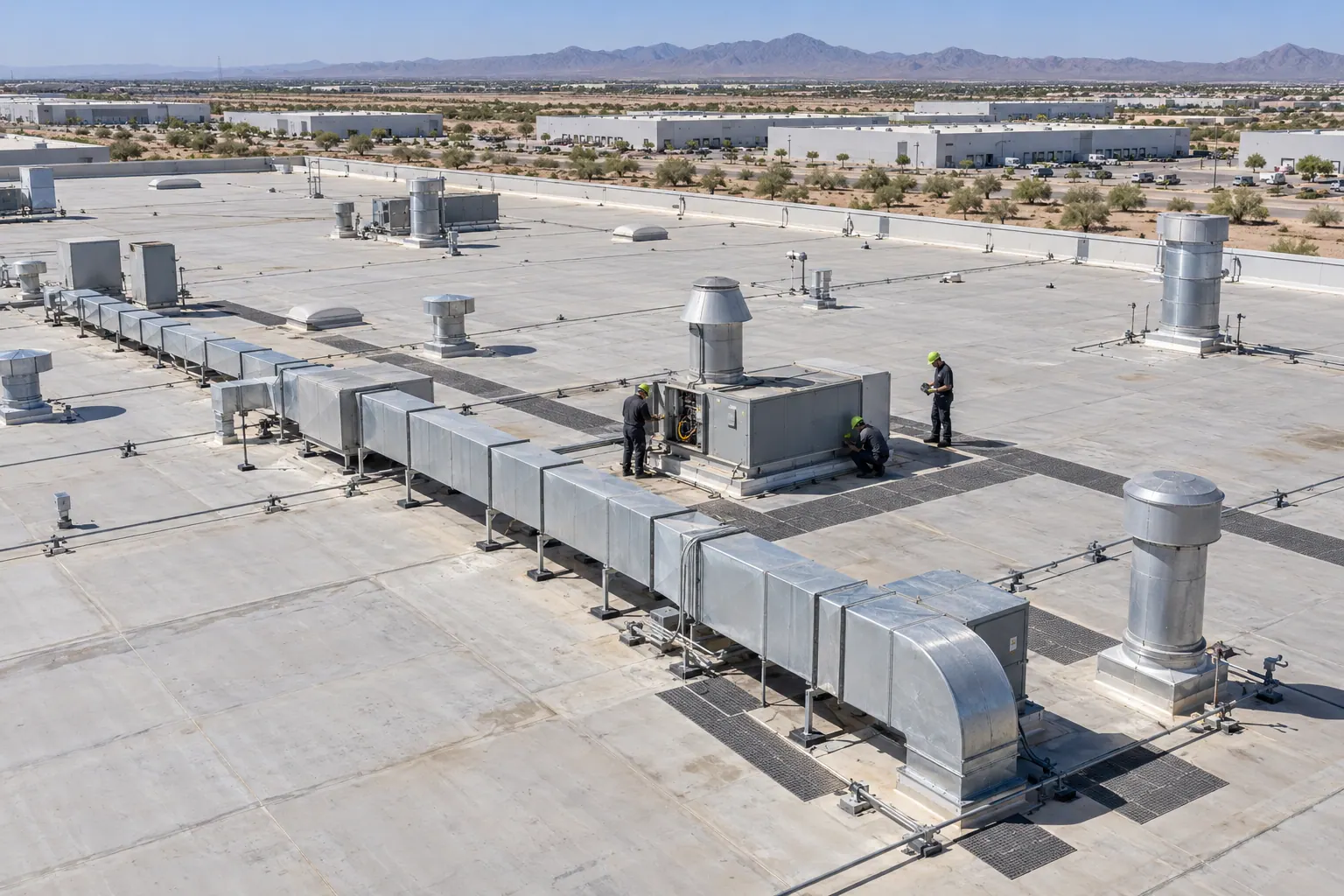
Industrial roofs repair well section by section. The question is whether the damage stays local.
Industrial roofs add equipment, exhaust, and heavy runoff to the usual flat roof details. These five come up most.
Plan view, not to scale
Grease and heat from kitchen and process exhaust soften some membranes and open the curb flashing. Heat-rated flashing and a grease guard at the fan fix it.
Heavy condensing units shift on their curbs, and condensate lines drip onto the membrane all day.
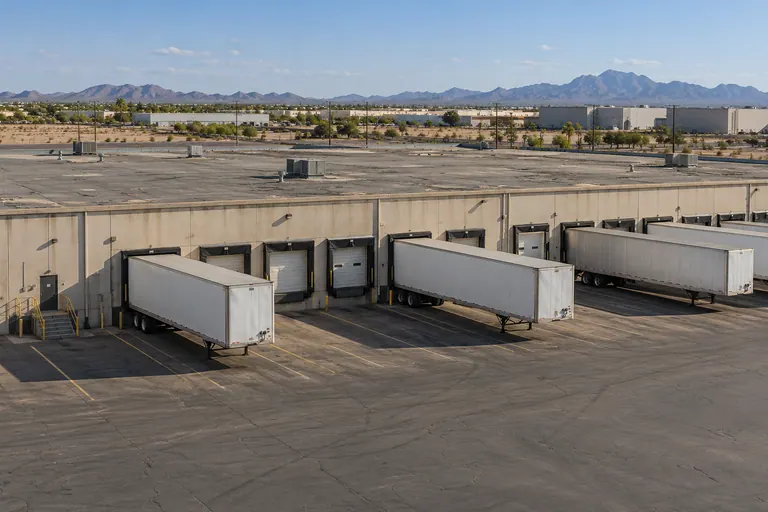
Gutters, scuppers, and edge metal over the dock doors carry runoff from a large roof area. Clogged downspouts send that water over the edge.
Vent and skylight curbs leak at their flashing and need guarding while crews work near them. Guards stay in place until that work area is closed up.
Service traffic between units wears and punctures the membrane wherever walk pads are missing.
Steam vents and pipe penetrations heat and cool all day, which opens their boots and flashing.
Repairs are grouped by the equipment or area they protect.
| Repair | When It Fits | What It Involves |
|---|---|---|
| Exhaust curb reflashing | Membrane softened by grease or heat | Remove damaged flashing, install heat- and grease-rated membrane, add a grease guard |
| Refrigeration curb repair | Leaks or condensation at condensing units | Reseal curb flashing and reroute condensate drips to a drain |
| Dock edge and gutter repair | Water over the dock doors | Clear downspouts, reseal edge flashing, repair or replace gutter sections |
| Smoke vent and skylight curbs | Leaks at vent or skylight bases | Reflash the curb, check the lid seal, set guarding before work |
| Walk pad installation | Punctures along service routes | Add walk pads between the hatch and each serviced unit |
| Penetration reflashing | Leaks at pipes, stacks, and conduit | Install new boots or field-wrapped flashing rated for the temperature of the pipe |
A leak over a production line or a cooler costs more than the repair. Fixing it early keeps the plant running.
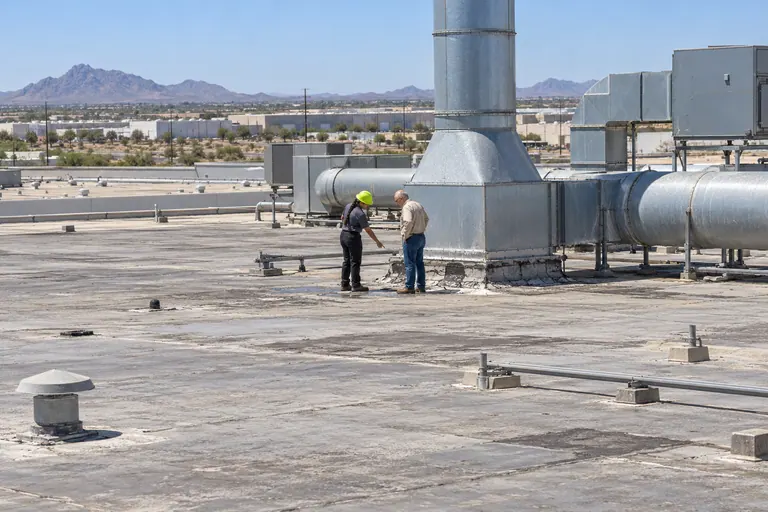
Call with the area and the equipment nearby. We plan the repair around your shift schedule and lock out the units crews work beside.
The work plan starts with your plant schedule, then follows the roof.
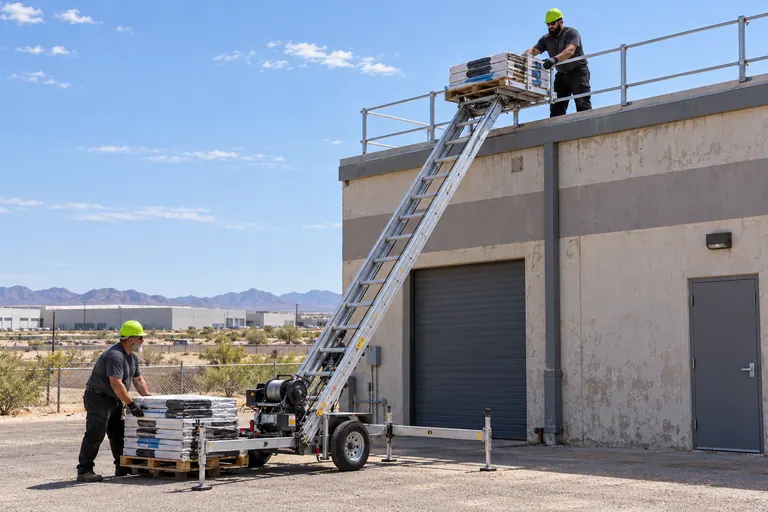
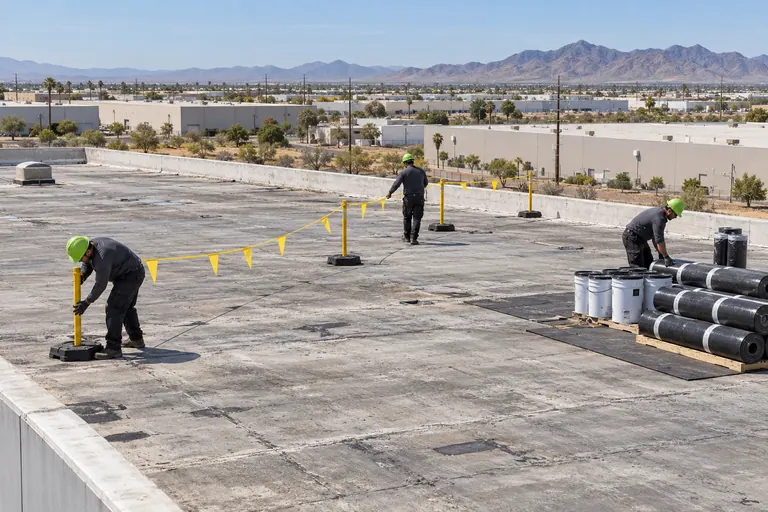
A roofer walks the roof with your maintenance lead, logging exhaust curbs, units, vents, dock edges, and service paths, plus any wet insulation.
Work zones, lockout on nearby units, and timing for adhesive or torch work are set against shifts and fresh-air intakes.
Each zone is repaired and closed before the next opens, so production areas never sit under an open roof overnight.
You get photos and a repair log by zone, which helps your maintenance team track the roof between visits.
Industrial roof work often calls for one of these as well.
Most plant roofs are TPO or built-up, so curb and drain work follows the same flat roof repair methods.
Flat roof repair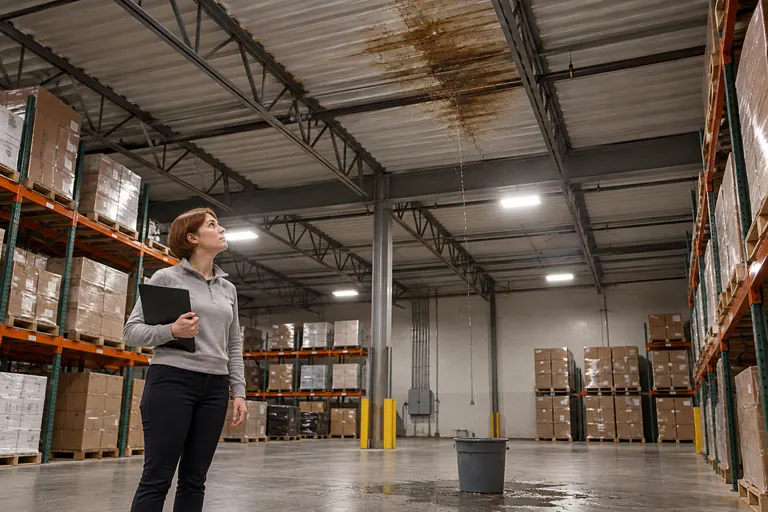
When drips show up over racking far from any unit, a leak trace finds the real opening before the work starts.
Leak tracing and repairWhat plant and warehouse managers ask before roof work starts.
Leaks by the docks almost always lead back to the roof edge over the doors, where gutters, scuppers, and edge metal take runoff from a big share of the roof. Clogged downspouts, separated edge flashing, and ponding rings by the dock wall are the first checks.
Around refrigeration units the problems are condensate dripping onto the membrane, heavy curbs shifting, and condensation forming under the roof. The fix pairs resealed curb flashing with a drip line run to a drain.
Yes. Material goes up away from active doors, the work area above a dock is set while that door sits idle, and edge work is staged so trailers keep moving.
We do. Curb flashing repairs sometimes need a unit raised or disconnected, so we schedule that with your equipment contractor and leave the unit work to them.
Grease breaks down some membranes faster than others. At kitchen or process exhaust we use membrane and flashing rated for grease and heat, and add a grease guard at the fan.
A repair log by zone, with photos, the materials used at each spot, and items noted for later, such as worn walk pads or units with loose curb flashing.
Each vent and skylight near the work gets a screen or guard before crews walk the area, and work near the roof edge uses warning lines or tie-off.
Yes, when daytime production makes the roof hard to work. Night work needs lighting, a clear access route, and agreement with the plant on noise, and it adds to the cost.
Food plants need debris and adhesive odors kept away from intakes and open product areas. We set work zones, cover nearby intakes when the plant allows it, and follow the plant contractor rules.
Send the building type and the problem area. We plan the repair around your plant schedule.
Want A Call Back About Your Roof?
Leave a name and number, or call (623) 310-0161 now.