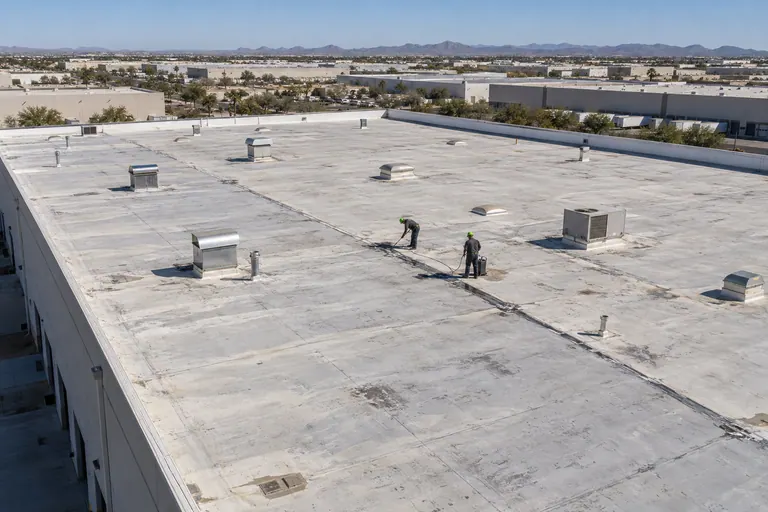
Flat Roof Repair
Many traced leaks end at a flat roof seam or drain, and those repairs follow the flat roof process.
Flat roof repair
We trace commercial roof leaks in Tolleson from the ceiling stain back to the opening on the roof, seal active leaks, then make the permanent repair once the source is confirmed.
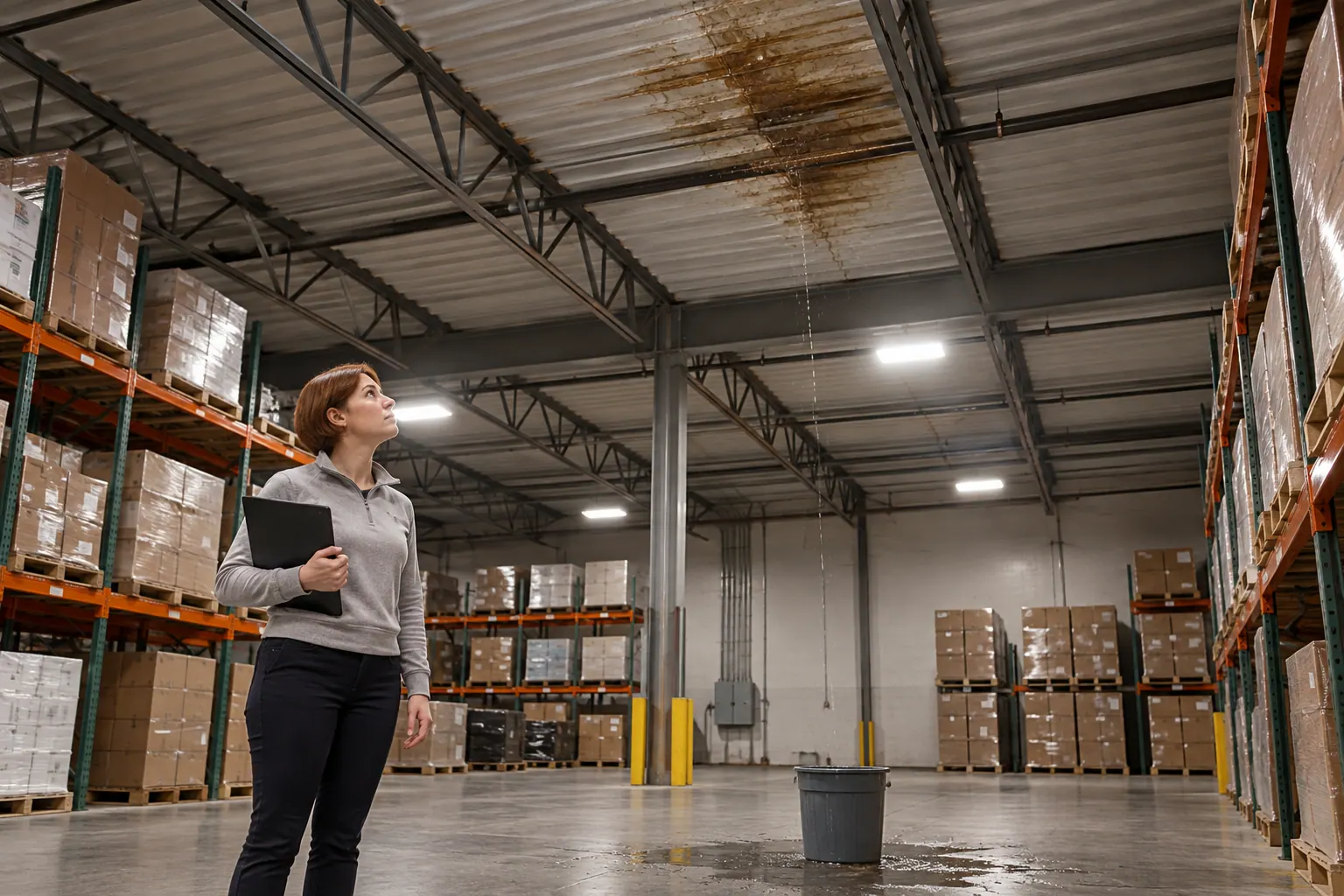
Most leaks can be traced and fixed. A few signs point to a larger problem behind the stain.
Water enters at a detail, then travels along the deck or a purlin. These are the starting points we trace back to.
Plan view, not to scale
Water enters at a curb corner and runs downslope under the membrane before it finds a deck joint.
Cracked frames and loose curb flashing leak in wind-driven rain, then drip several feet away.
A short split lap lets water travel between insulation boards to a low point in the deck.
Torn boots leak straight down, though wet insulation can carry the water well away first.
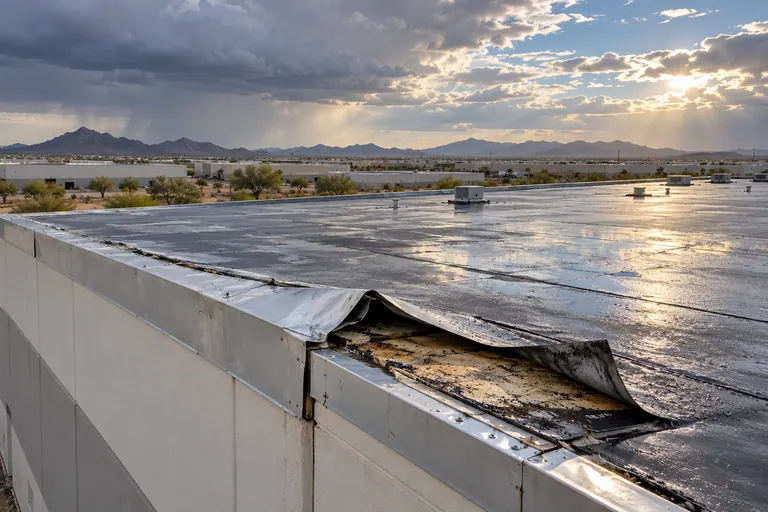
Gaps behind loose wall flashing feed water down the inside of the parapet. New wall flashing and resealed coping stop it.
Water backs up around a blocked drain and rises above the flashing at the bowl.
Leak repair has two stages, the temporary seal and the permanent fix, with tracing between them.
| Repair | When It Fits | What It Involves |
|---|---|---|
| Temporary seal | Active leak during or after rain | Seal the opening with compatible tape or mastic to slow water while the area dries |
| Moisture scan | Unknown wet area around a stain | Scan the roof surface and confirm with core cuts where readings run high |
| Section water test | Source still unclear after the walk | Flood or spray one section at a time while someone watches inside |
| Permanent repair | Source confirmed and surface dry | Weld, ply, or reflash at the entry point, replacing wet insulation if found |
| Interior check | Stain over racking or equipment | Look at the deck from inside, mark the drip on the floor plan, photograph it |
| Condensate check | Drips near units on dry days | Check drain pans and condensate lines, reroute drips to a drain, and seal the curb |
Patching the roof right above the stain misses most leaks. Tracing first keeps you from paying twice.
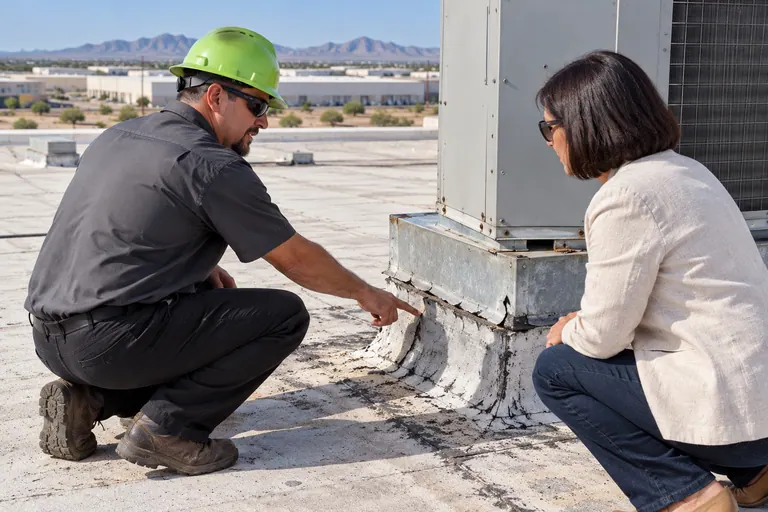
Call with the building address and where the water lands. An active leak gets a temporary seal while the trace and repair get scheduled.
The process works from the inside out: the stain first, then the roof above it and upslope.
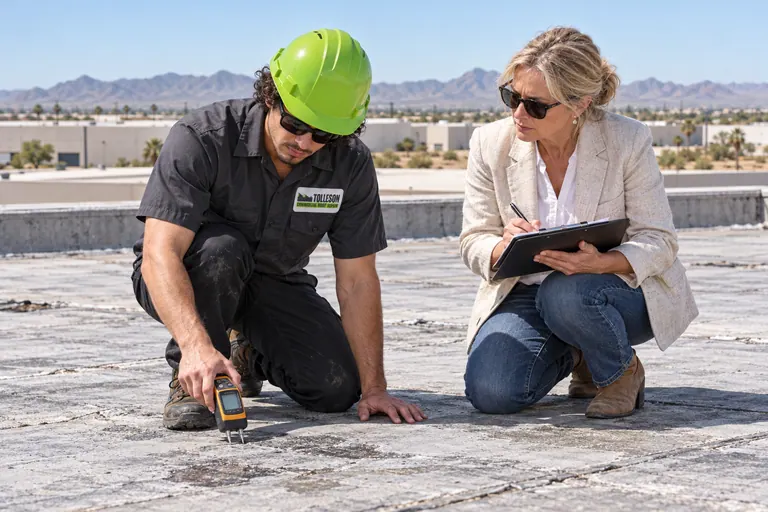
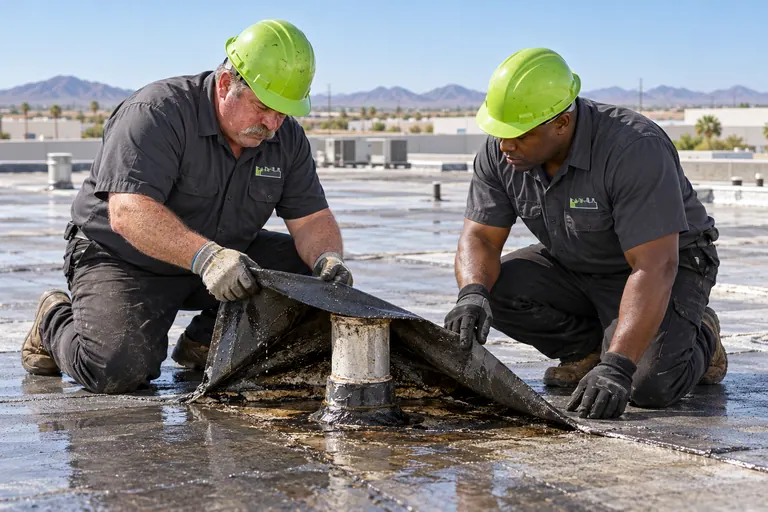
We start under the stain, check the deck from inside, then walk the roof above and upslope, checking every curb, seam, and boot nearby.
Moisture scans, core cuts, or a section water test confirm where the water gets in and how far it travels.
Active openings get a temporary seal. The permanent repair follows once the surface is clean and dry enough to bond.
Repaired spots get water-tested where the roof allows it, and you get photos of the source and the repair.
A trace often ends in one of these two repairs.
Many traced leaks end at a flat roof seam or drain, and those repairs follow the flat roof process.
Flat roof repair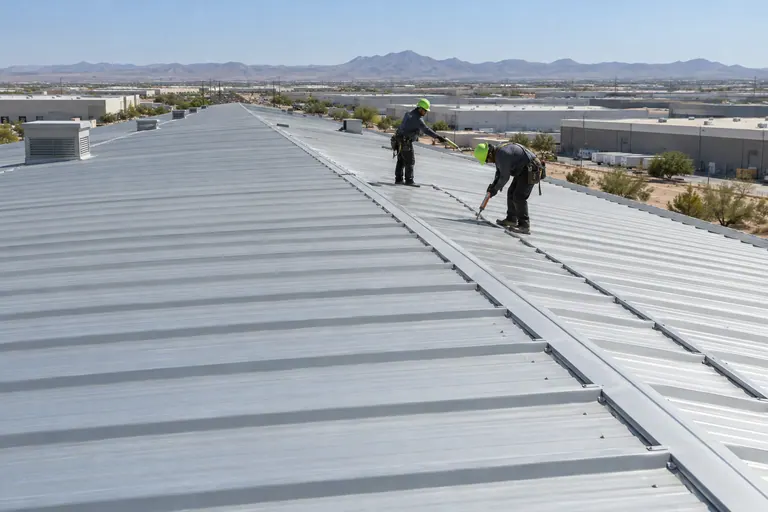
On metal buildings, the trace often leads to a backed-out screw or a dried lap several panels upslope.
Metal roof repairWhat owners ask when a stain shows up inside.
Water travels before it shows. It enters at an open seam or flashing, then runs along the deck, between insulation boards, or down a purlin until it finds a gap.
On a large warehouse that path can be long, so tracing means walking upslope of the stain, checking nearby curbs and seams, and sometimes testing one section at a time.
Yes in most cases. Moisture scans and small core cuts show where water sits, and a section water test confirms the entry point. Core holes get patched on the same visit.
Both. During the season an active leak gets a temporary seal right away. The permanent repair goes on once the surface is dry enough to bond, which in July and August often means a dry morning between storms.
Wind direction matters. Monsoon outflow winds push rain sideways under laps, flashing, and skylight frames that stay dry in a straight-down rain, and that pattern helps narrow the search.
Photograph the stain and any wet stock with the date, note when the storm hit, and keep receipts for buckets, tarps, or temporary repairs. Those records help with an insurance claim and with the trace.
Yes. Water that sits in insulation spreads sideways, rusts the deck, and can reach light fixtures and electrical runs, which is why wet insulation found during the trace gets cut out and replaced.
We do. Drips on dry mornings, wide damp areas, and wet insulation on the warm side of the roof point to condensation. That fix sits at the vapor path and ventilation, so the report says which problem you have.
Tell us where the water shows up inside. We trace it, seal it, and repair it at the source.
Want A Call Back About Your Roof?
Leave a name and number, or call (623) 310-0161 now.